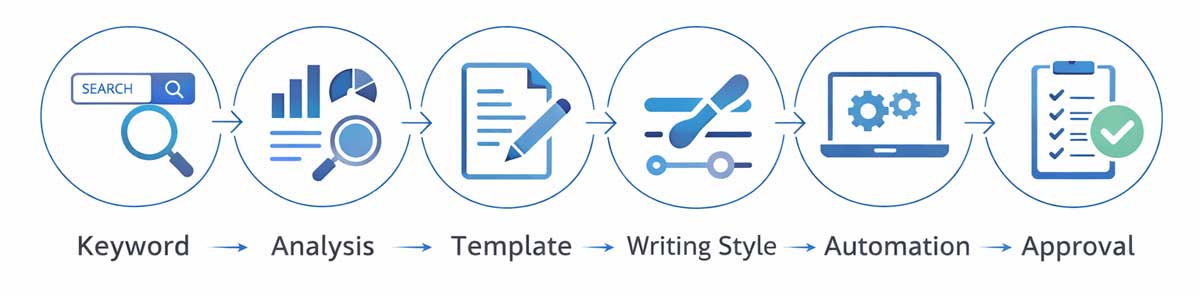
→ What makes RIREON so special
Editorial Cost-Benefit Maps
Editorial Cost-Benefit Maps show which formats deserve deeper editing and which move faster. A short support article often needs light cleanup, while a comparison piece needs careful fact checks, context, and sourcing. Pricing editorial work around hours instead of word count gives your strategy a more honest budget and steadier output.
Preparation for Workflow Integration
Once the strategy feels settled, the daily editorial workflow decides whether the system holds together. An AI text generator works best when each person knows the task, the review scope, and the handoff time. A tight brief keeps intent clear, writers stay on track, editors protect tone, and legal reviewers catch risks before publication. Shared ownership prevents prompt tweaks from creating random voice shifts across your site. In many teams, a draft moves from brief to SEO assessment and then to compliance within a single afternoon. Having stable roles turns generation from isolated output into a repeatable operating system. Templates and platform rules keep the pipeline predictable.
Pipeline steps and checkpoints
A solid brief sets intent, source needs, and format before the
pipeline starts. Then the generator drafts the page, editors tighten structure, verify facts, and refine
seo alignment. Legal reviewers confirm compliance and timing. Clear
checkpoints cut missed errors, and they stop small prompt changes from breaking the process.
- Briefing intent and scope
- Drafting initial page content
- Editing structure and facts
- Legal compliance and timing
- Checkpoint validation and control
Prompt templates and quality checks
Useful prompt templates give the model enough context to stay steady and specific. Your review loop should check originality, factual accuracy, readability, and brand fit during quality checks. That simple habit matters. Without it, rankings may reflect luck rather than dependable content quality.
Execution: Testing and Measurement
Thoughtful Testing shows where automation earns its place and where it starts to bluff. Reader behavior and search metrics together tell you whether a draft lifts rankings, engagement, or neither. Fair comparisons need similar topics, matched publish dates, and the same search intent. In a B2B software blog, matched article sets showed 30% more scroll depth for AI-assisted drafts, but traffic quality and internal link paths explained whether that lift mattered. What does extra traffic buy if visitors leave after eight seconds? Evidence beats enthusiasm here. An evidence-based approach to Measurement protects budgets from shiny claims about scale.
Benchmarking AI versus human content
When you compare equal briefs across similar topics and matched windows, ranking movement becomes easier to read. One page set uses an AI text generator, another relies on human content creators, and the analysis tracks SERP change, dwell time, conversions, update effort, and simple heatmap signals that expose reader hesitation.
Reader Trust Heatmaps
On a page, trust heatmaps show where readers pause, click, or leave, and that detail matters. Scroll depth and click patterns reveal whether a draft feels thin or useful. Short surveys add context analytics miss about an ai text generator voice. This creates blind spots. Together, these signals protect reader trust and support visibility.
Maintenance: Quality, Compliance, and Governance
Lasting performance depends less on speed and more on disciplined maintenance over time. Regular audits catch stale facts, duplicated intent, weak evidence, and policy gaps before rankings slip. Clear editorial roles support Quality control as the site grows. If your content generation software scales output across regions, local review becomes essential. Strong Governance keeps translation nuance, privacy standards, and approval trails intact.
Ongoing quality metrics
A practical set of
quality metrics tracks accuracy, freshness, tone, and performance drift. Sampling published pages each month shows when an
AI Text Generator starts sounding generic or dated. Clear thresholds tell your team when to revise, merge, or remove weak pages. That discipline reduces avoidable publishing risk and protects hard-won visibility.
- Monthly page sampling
- Quality metric tracking
- Threshold-based flags
- Revision and consolidation actions
- Visibility protection monitoring